6 min read
Japan, China, And Taiwan Security: Rising Tensions, Economic And Strategic Risks In East Asia
Asia
Politics
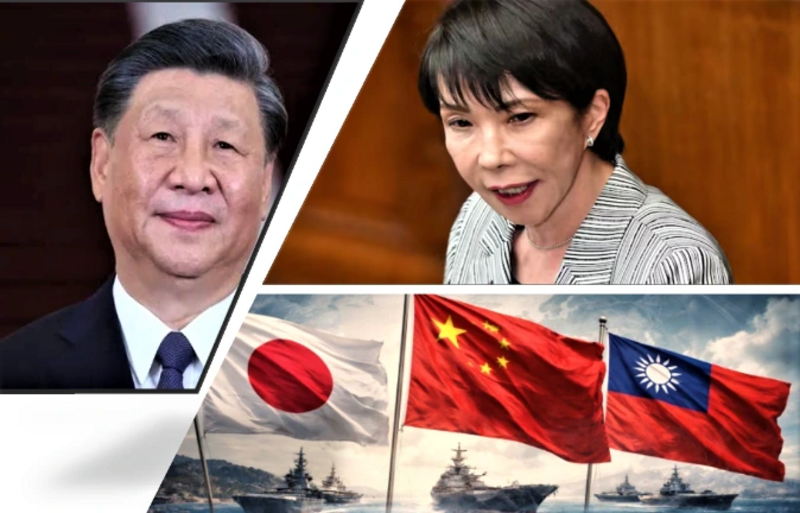
Tensions between Japan, China, and Taiwan have intensified sharply in recent years. Once managed through careful diplomacy and strategic ambiguity, security issues are now expressed through public rhetoric, military signaling, and economic responses. Recent comments by Japanese leaders about a potential Taiwan conflict drew strong reactions from Beijing, highlighting the risks to regional stability and East Asia security.
These developments are part of a larger transformation in East Asia: the decline of post–Cold War restraint, the emergence of hard security blocs, and the use of economic coercion as a gray-zone strategy. Taiwan sits at the center of this evolving strategic landscape, both as a deterrent and a potential vulnerability.
Japan-Taiwan Security Stance: Shifting Rhetoric and Policy
Prime Minister Sanae Takaichi’s statement calling a potential Chinese attack on Taiwan “survival-threatening” for Japan marks a shift from Japan’s historically cautious approach to Taiwan. Under Japan’s 2015 security legislation, Tokyo may act in collective self-defense if a Taiwan contingency threatens its southern islands.
This shift reflects both structural changes and domestic pressures. Political leaders are increasingly willing to challenge postwar taboos due to China’s growing military capabilities and expectations from the United States. Japan’s rhetoric is part of a broader effort to define its strategic identity, moving from strategic ambiguity to strategic clarity, even at the risk of provoking China.
This shift reflects both structural changes and domestic pressures. Political leaders are increasingly willing to challenge postwar taboos due to China’s growing military capabilities and expectations from the United States. Japan’s rhetoric is part of a broader effort to define its strategic identity, moving from strategic ambiguity to strategic clarity, even at the risk of provoking China.
Internal Debates in Japan, China, and Taiwan
The current tensions are not uniform; each country faces internal debate that shapes policy:
-
Japan: Takaichi represents a hawkish perspective, but parties like Komeito and parts of the bureaucracy worry that strong commitments on Taiwan could draw Japan into conflict or violate postwar principles. Public opinion shows concern about China but reluctance for military engagement.
-
China: Hardliners push for accelerated action on Taiwan, while economic technocrats warn against escalation that could harm growth or invite sanctions.
-
Taiwan: The ruling Democratic Progressive Party favors alignment with Japan and the U.S., while opposition parties fear becoming a central target. Public opinion increasingly supports self-defense but prefers avoiding escalation.
These internal differences create opportunities for moderation but also risks of miscalculation.
Strategic Theory: Deterrence, Ambiguity, and the Security Dilemma
Japan frames its statements as defensive deterrence, while China interprets them as hostile. This classic security dilemma illustrates how one country’s efforts to increase security can prompt countermeasures by others.
For decades, Taiwan’s stability relied on strategic ambiguity. Japan’s recent language contributes to strategic clarity, strengthening deterrence but narrowing diplomatic space and increasing escalation risks. The challenge is maintaining deterrence without crossing into perceived encirclement.
China Economic Strategy: Response to Japanese Rhetoric
China condemned Japan’s statements, raised the dispute at the United Nations, and warned that any foreign military intervention in Taiwan would be considered aggression against China.
In 2025, Beijing also applied economic coercion measures: suspending Japanese seafood imports and discouraging Chinese tourism to Japan. These actions show China’s preference for gray-zone economic strategies, allowing signaling of resolve without triggering direct conflict.
Military Balance and Regional Vulnerabilities
Beneath diplomatic posturing, military realities are shifting. China continues to expand anti-access and area-denial capabilities, while Japan’s southern islands are within missile range. Taiwan increasingly focuses on asymmetric defense strategies.
Japan has unveiled evacuation plans for over 100,000 residents and tourists from its southern islands in a Taiwan crisis, with drills expected in 2026. These preparations are both practical and symbolic, signaling the real risk to Japan in any Taiwan contingency.
Taiwan’s Strategic Role: Deterrent or Flashpoint?
Taiwan’s growing visibility increases both deterrence and exposure. Explicit alignment with Japan and the U.S. enhances its strategic value, but also makes it more susceptible to surveillance, exercises, and gray-zone pressure. Taiwan is increasingly a focal point for signaling, where even minor incidents could escalate quickly.
Escalation Pathways and Alternative Futures
Short-term full-scale conflict is unlikely, but incremental escalation is possible where there is:
Strategic Theory: Deterrence, Ambiguity, and the Security Dilemma
Japan frames its statements as defensive deterrence, while China interprets them as hostile. This classic security dilemma illustrates how one country’s efforts to increase security can prompt countermeasures by others.
For decades, Taiwan’s stability relied on strategic ambiguity. Japan’s recent language contributes to strategic clarity, strengthening deterrence but narrowing diplomatic space and increasing escalation risks. The challenge is maintaining deterrence without crossing into perceived encirclement.
China Economic Strategy: Response to Japanese Rhetoric
China condemned Japan’s statements, raised the dispute at the United Nations, and warned that any foreign military intervention in Taiwan would be considered aggression against China.
In 2025, Beijing also applied economic coercion measures: suspending Japanese seafood imports and discouraging Chinese tourism to Japan. These actions show China’s preference for gray-zone economic strategies, allowing signaling of resolve without triggering direct conflict.
Military Balance and Regional Vulnerabilities
Beneath diplomatic posturing, military realities are shifting. China continues to expand anti-access and area-denial capabilities, while Japan’s southern islands are within missile range. Taiwan increasingly focuses on asymmetric defense strategies.
Japan has unveiled evacuation plans for over 100,000 residents and tourists from its southern islands in a Taiwan crisis, with drills expected in 2026. These preparations are both practical and symbolic, signaling the real risk to Japan in any Taiwan contingency.
Taiwan’s Strategic Role: Deterrent or Flashpoint?
Taiwan’s growing visibility increases both deterrence and exposure. Explicit alignment with Japan and the U.S. enhances its strategic value, but also makes it more susceptible to surveillance, exercises, and gray-zone pressure. Taiwan is increasingly a focal point for signaling, where even minor incidents could escalate quickly.
Escalation Pathways and Alternative Futures
Short-term full-scale conflict is unlikely, but incremental escalation is possible where there is:
- Expanded Chinese economic strategy against Japan.
- Military exercises near Taiwan and the Ryukyu Islands.
- Diplomatic confrontations in multilateral forums.
- Gray-zone incidents at sea or in airspace.
Potential long-term futures:
-
Managed Rivalry: Hotlines, forums, and tacit red lines reduce escalation; economic ties remain partially insulated.
-
Hard-Bloc Polarization: East Asia fractures into opposing security and economic blocs, with Taiwan as the central fault line.
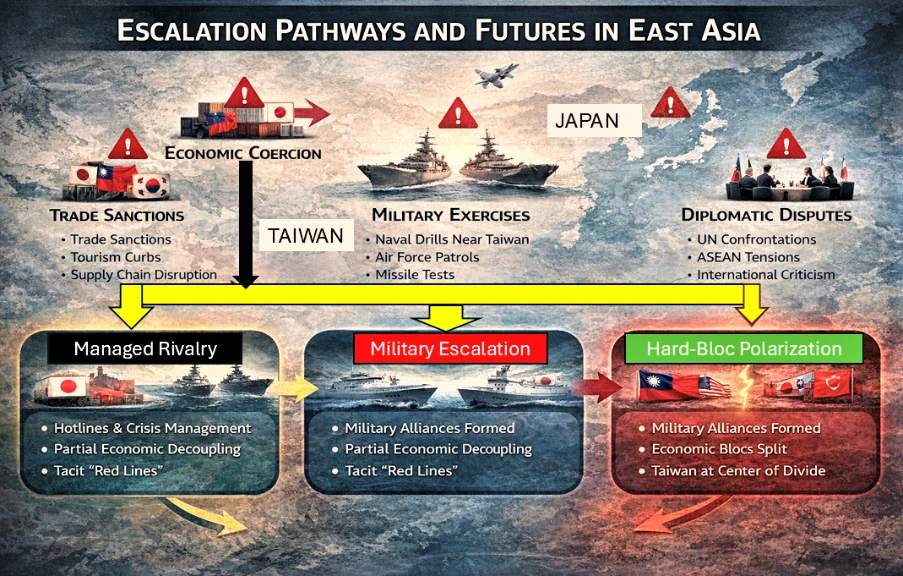
East Asia 2025 escalation pathways showing economic coercion, military exercises, gray-zone incidents, diplomatic disputes, and outcomes: Managed Rivalry vs Hard-Bloc Polarization.
Policy Recommendations for Stability in East Asia
While tensions are rising, conflict is not inevitable. Practical steps to reduce risk include:
While tensions are rising, conflict is not inevitable. Practical steps to reduce risk include:
-
Crisis Hotlines: Permanent military-to-military communication channels between Japan and China can prevent misunderstandings near Taiwan and the Ryukyus.
-
Separate Economics from Security: Agreements via APEC or ASEAN+ to limit economic retaliation during security disputes reduce escalation incentives.
-
Careful Language: China, Japan and Asia partners while emphasizing maintaining of deterrence should leave space for diplomacy.
Without these measures, Taiwan risks becoming a trigger for broader conflict, and small misperceptions could escalate into crises.
FAQ: Key Questions About East Asia Security Dynamics
1: What is Japan’s current security stance on Taiwan?
Japan’s 2015 legislation allows collective self-defense if Taiwan contingencies threaten Japanese security, especially the southern islands. Recent statements reflect a shift toward clearer deterrence.
2: How has China responded to Japanese remarks on Taiwan?
China condemned Japan at the UN and used economic strategy in 2025, including suspending Japanese seafood imports and discouraging Chinese tourism.
3: Why is Taiwan becoming more exposed?
Closer alignment with Japan and the U.S. increases Taiwan’s deterrent value but also makes it more visible to Chinese surveillance, exercises, and gray-zone pressure.
4: What are the main risks of escalation in East Asia?
Risks include incremental economic coercion, military exercises near Taiwan, diplomatic disputes, gray-zone incidents, and potential blockades or accidental encounters.
5: What steps can reduce the risk of conflict?
Practical measures include crisis hotlines between militaries, insulating economic ties from security disputes, and careful, non-provocative deterrence language.
FAQ: Key Questions About East Asia Security Dynamics
1: What is Japan’s current security stance on Taiwan?
Japan’s 2015 legislation allows collective self-defense if Taiwan contingencies threaten Japanese security, especially the southern islands. Recent statements reflect a shift toward clearer deterrence.
2: How has China responded to Japanese remarks on Taiwan?
China condemned Japan at the UN and used economic strategy in 2025, including suspending Japanese seafood imports and discouraging Chinese tourism.
3: Why is Taiwan becoming more exposed?
Closer alignment with Japan and the U.S. increases Taiwan’s deterrent value but also makes it more visible to Chinese surveillance, exercises, and gray-zone pressure.
4: What are the main risks of escalation in East Asia?
Risks include incremental economic coercion, military exercises near Taiwan, diplomatic disputes, gray-zone incidents, and potential blockades or accidental encounters.
5: What steps can reduce the risk of conflict?
Practical measures include crisis hotlines between militaries, insulating economic ties from security disputes, and careful, non-provocative deterrence language.

Senior Editor: Kenneth Njoroge
Business & Financial Expert | MBA | Bsc. Commerce | CPA
Author Name
Author intro
Author bio goes here.