
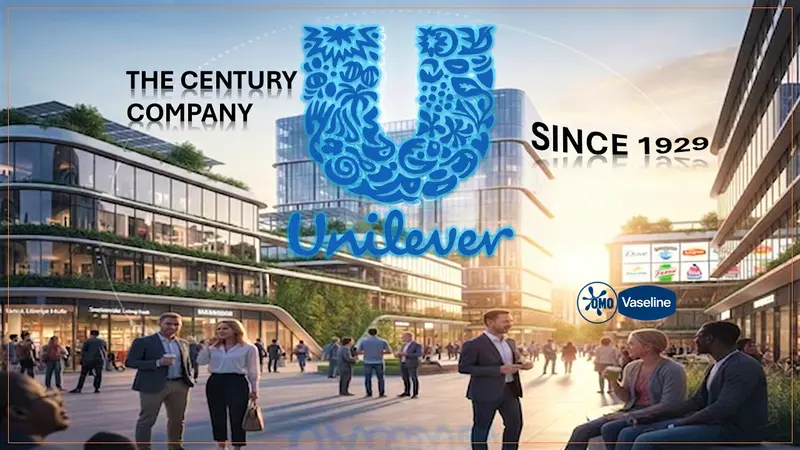
Unilever corporate plaza with iconic logo and global brands Dove, Lifebuoy, OMO, Vaseline. Image Credits: Nelly Wambui & Kenneth Njoroge via Kencrave
Europe
This report offers a different way of looking at Unilever. Rather than reacting to quarterly earnings, analyst opinions, or short‑term stock movements, it steps back and examines the company through a wider 360 angle lens.
It looks at the strategic decisions made over nearly a century by the company. It distils how those choices accumulated, shaped the company’s identity, and how they influence what Unilever is becoming now.
It looks at the strategic decisions made over nearly a century by the company. It distils how those choices accumulated, shaped the company’s identity, and how they influence what Unilever is becoming now.
Unilever is currently undergoing its most significant transformation in decades. Entire divisions have been sold or spun off. Leadership has shifted multiple times. The brand portfolio has been reshaped with unusual speed for a company of its scale. None of these moves are random.
They follow a clear internal logic with long‑term implications, not only for Unilever but for the broader consumer goods landscape. Understanding that logic requires going deeper than what investors and business leaders are aware of. It means asking not just what Unilever is doing, but why these decisions are happening now, and what they reveal about the future of global brands.
They follow a clear internal logic with long‑term implications, not only for Unilever but for the broader consumer goods landscape. Understanding that logic requires going deeper than what investors and business leaders are aware of. It means asking not just what Unilever is doing, but why these decisions are happening now, and what they reveal about the future of global brands.
This report provides a comprehensive, structured view of Unilever and the industry it operates in. It places Unilever side‑by‑side with its closest competitors such as Procter & Gamble, Nestlé, Colgate‑Palmolive, Reckitt, and Mars. It shows how each company’s strategy has evolved.
These comparisons highlight why some rivals have surged ahead in certain categories while others have struggled to match Unilever’s scale, reach, or resilience. You will clearly see where Unilever leads decisively, where it trails, and where it has intentionally chosen a different path based on its own strategic priorities.
These comparisons highlight why some rivals have surged ahead in certain categories while others have struggled to match Unilever’s scale, reach, or resilience. You will clearly see where Unilever leads decisively, where it trails, and where it has intentionally chosen a different path based on its own strategic priorities.
Every claim in the analysis is grounded on publicly available data, clearly labelled estimates, or the report’s own transparent calculations. Financial projections are presented as scenarios, not predictions. The goal is to give you a framework you can trust. This allows you to form your own conclusions rather than rely on a single view.
Whether you are an investor, a strategist, a business leader, or simply someone who pays close attention to global brands, this report will offer a fresh perspective. You will learn which brands quietly fund the rest of the portfolio, which bets carry real risk, and why Unilever ultimately chose to walk away from ice cream after decades of building it into a global powerhouse.
The full analysis will be released on a scheduled date. Do not miss it. Be on the look out on our page to receive the complete report the moment it becomes available, along with supporting data and ongoing updates.
The insights ahead may change how you see not only Unilever, but the entire consumer goods sector. It provides a pathway on how businesses can scale and survive for the next 100 years. Its a blueprint for corporate governance for organizations.
The insights ahead may change how you see not only Unilever, but the entire consumer goods sector. It provides a pathway on how businesses can scale and survive for the next 100 years. Its a blueprint for corporate governance for organizations.