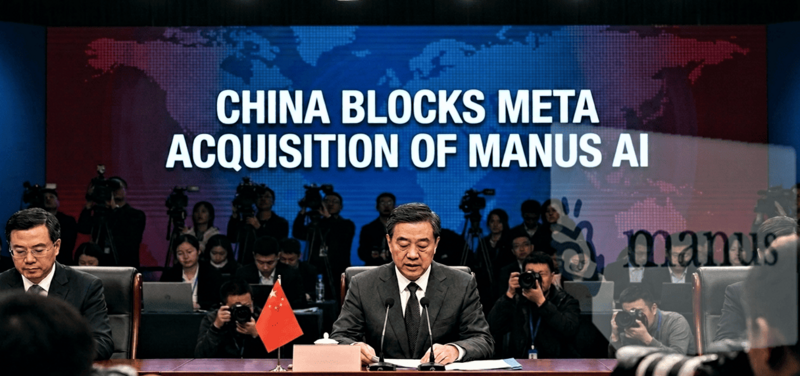
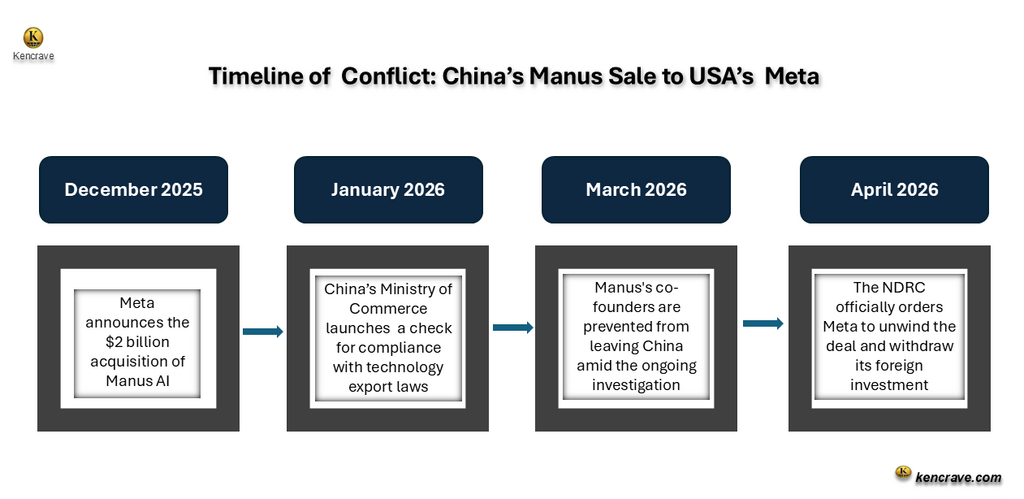
China has taken a major step in the intensifying global tech rivalry. According to reports, the Chinese government has ordered Meta Platforms to reverse its acquisition of the AI startup Manus AI. On April 27, 2026, the National Development and Reform Commission (NDRC) issued a directive to both sides to unwind the deal and return the startup’s China-based assets to their previous state.
Meta’s planned $2 billion purchase of Manus AI was first announced in late December 2025. This was meant to strengthen Meta’s artificial intelligence efforts by bringing Manus’s autonomous agent technology into platforms that is Facebook, Instagram, and WhatsApp. But with Beijing stepping in, the future of that integration will face major legal and operational uncertainty.
Why China Blocked the Sale
The NDRC’s decision to block Meta Manus AI acquisition is based on three primary factors: China’s national security, the prevention of technology leakage, and a crackdown on Singapore being used as a centre to poach Chinese technology.
1. National Security and Strategic Sovereignty
Chinese officials said the decision was driven due to national security concerns. Beijing considers “agentic AI” systems that are capable of independently planning and carrying out complex tasks as critical technology for its long‑term economic and military advantage. According to industry estimates, AI could contribute up to $15.7 trillion to the global economy by 2030, making control over such technologies a strategic priority.
2. Preventing Technology Leakage to the U.S.
The sale blockage of Manus AI shows the tech war between China and the U.S. While the U.S. has restricted the export of advanced chips to China, Beijing is adopting the same tactics by restricting the export of advanced Chinese-developed AI software to American firms. Manus’s technology has been compared to DeepSeek model breakthrough. If the sale were to be a success, Meta would enjoy a critical advantage that was originally started within the Chinese ecosystem.
China already accounts for over 40% of global AI patents, underscoring why it is aggressively protecting domestic innovation.
3. Cracking Down on the “Singapore‑Washing” Strategy
Manus AI was originally founded in China but shifted its headquarters to Singapore in mid‑2025. This move known as “Singapore‑washing,” was meant to control U.S. investment limits and China’s own export controls. By forcing the deal to be reversed, Beijing is pointing to other tech entrepreneurs that moving a company offshore does not place it beyond the reach of Chinese regulators.
Timeline showing key events in the Meta-Manus AI acquisition dispute, from Meta’s 2025 purchase announcement to China’s 2026 order to unwind the deal.
For Meta, China’s ruling on Manus AI presents a major setback to its plans for building out AI agents. The company had already begun deeply integrating Manus’s engineers and technology into its Singapore operations. Banning the acquisition at this stage presents technical problems for Meta since separating codebases and training data is extremely difficult as the blending had already begun.
Geopolitical Implications of China Blocking Meta
Banning by of Manus sale is a clear reminder from Beijing that any technology originating in China ultimately falls under China’s strategic control, no matter where a company later incorporates or relocates.
It also points to hitting back to U.S technologies trying to access China’s markets. This is a replica of how China’s Huawei had to cease operations in the U.S and Tiktok had to sell a majority stake to American led investor group that led to the formation of Tiktok USDS.
The timing of this ban is well noted since it was issued just weeks before a planned summit in Beijingbetween U.S. President Donald Trump and Chinese President Xi Jinping. This is likely to create a diplomatic leverage for China ahead of negotiations over trade and technology controls.
Bottomline: The sale ban of Manus AI move signals China’s tightening grip on AI exports and sets the stage for deeper global tech fragmentation
Key Takeaways
China blocked Meta’s Manus AI acquisition to protect national security and maintain control over strategic AI technology.
The decision reflects escalating U.S.–China tensions and a growing “tech war” over AI dominance.
Beijing is tightening rules to prevent domestic technology from being transferred to foreign companies.
The move signals that relocating companies abroad (e.g., to Singapore) won’t bypass Chinese regulation.
The ban creates operational and strategic setbacks for Meta’s AI expansion plans.
FAQs
1. Why did China block Meta’s acquisition of Manus AI? China cited national security concerns, risk of technology leakage, and efforts to stop regulatory loopholes like “Singapore washing.
2. How does this impact Meta’s AI strategy? It disrupts Meta’s plans to integrate Manus AI’s autonomous agent technology, creating technical and operational challenges.
3. What does this mean for the global tech landscape? It signals deeper fragmentation in global technology ecosystems and intensifies competition between the U.S. and China over AI leadership.
4. What is Manus AI? Manus AI is an AI startup specializing in autonomous agent systems capable of executing complex tasks with minimal human input.
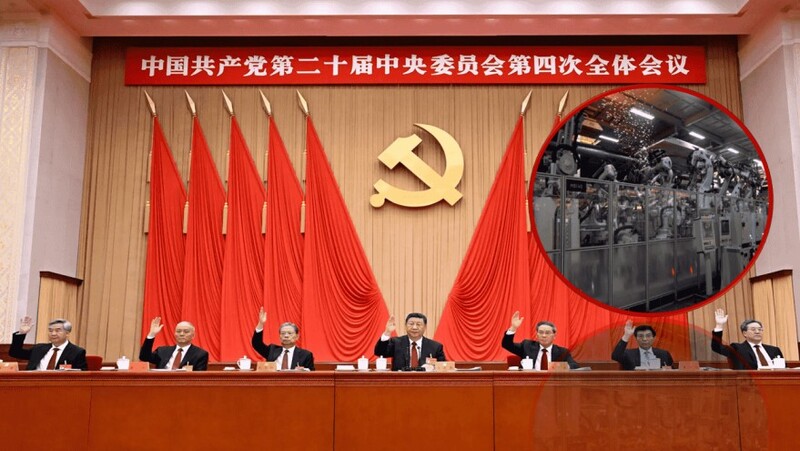
Amid escalating trade tensions with the United States, China’s leadership has intensified its focus on technological innovation and self-reliance. The Fourth Plenum Session of the Communist Party, held from October...