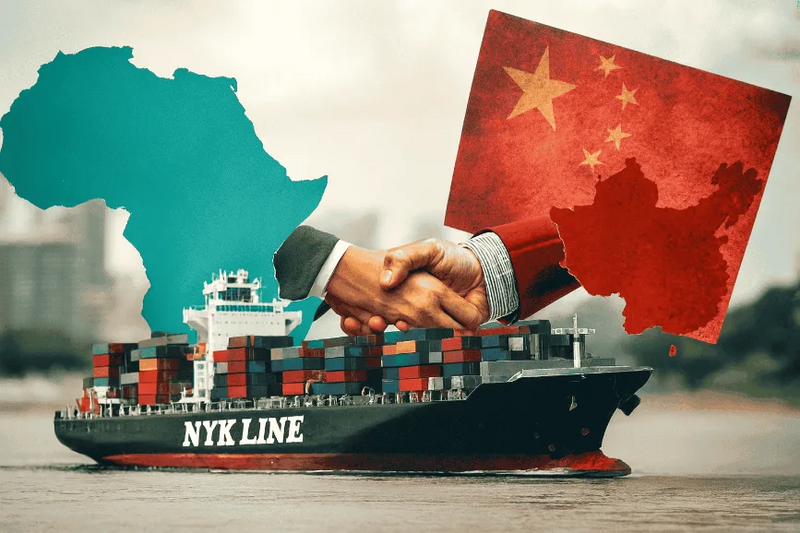
China’s engagement in Africa has expanded dramatically over the past two decades, reshaping economies, trade patterns, and political alliances. As China becomes Africa’s largest trading partner, biggest bilateral lender, and a leading source of technology and infrastructure, understanding the real impact of this relationship is essential.
This analysis examines:
How China builds influence in Africa
What African countries gain
Where trade imbalances create long-term challenges
How investment in minerals, infrastructure, and digital systems strengthens China’s geopolitical presence
China–Africa Trade: Benefits, Imbalances, and Long-Term Risks
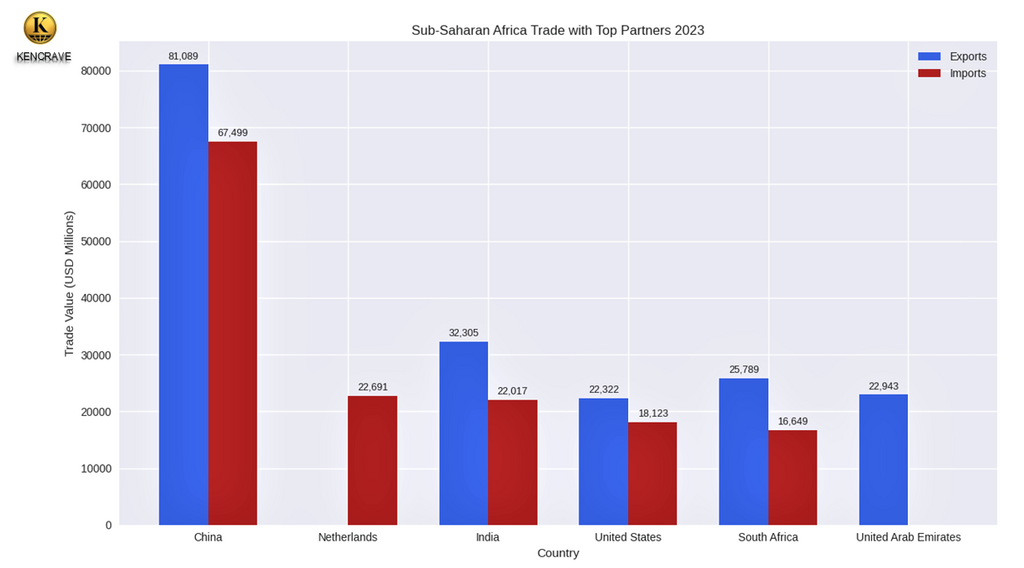
Sub-Saharan Africa’s trade relationship with China remains deeply asymmetrical. According to World Bank WITS (2023), Africa imports far more from China than it exports, creating a persistent trade gap.
Key Trade Insights
China exported US$81B to Africa in 2023.
Africa exported US$67.5B to China.
The deficit continues to widen as Africa imports more manufactured goods, machinery, and technology.
Africa’s exports remain dominated by raw materials: oil, minerals, metals, and agricultural commodities
This reinforces Africa’s position as a resource supplier and China’s role as a manufacturing powerhouse, limiting Africa’s ability to move up the value chain.
In contrast, traditional partners such as the United States, the Netherlands, and India maintain significantly smaller trade volumes.
Sub-Saharan Africa trade chart 2023 showing exports in blue and imports in red for China, India, South Africa, United States, UAE, and Netherlands. Source: World Bank
Key Insights from the graph
China: Largest partner, with $81.1B exports vs $67.5B
India: $32.3B exports vs $22B imports → surplus of est. $10B.
South Africa: $25.8B exports vs $16.6B imports → surplus of est. $9B.
United States: $22.3B exports vs $18.1B imports → near balance.
UAE: Export-heavy partner ($22.9B exports), no imports recorded.
Netherlands: Import-heavy partner ($22.7B imports), no exports recorded.
China’s Infrastructure Investments in Africa
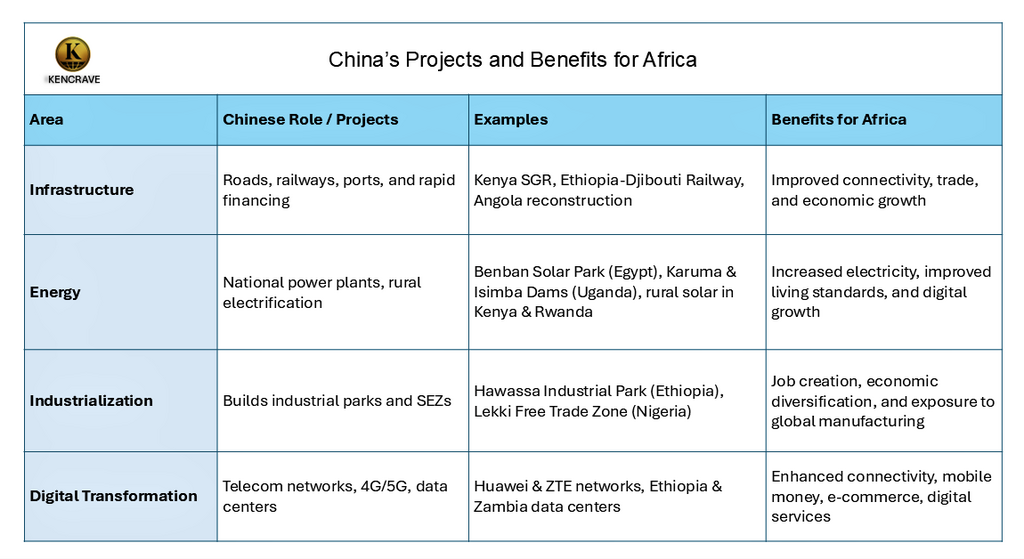
China’s most visible influence comes through infrastructure: roads, railways, ports, power stations, and fiber networks. These projects form the foundation of the China–Africa economic partnership.
Table showing China's signature projects and benefits for Africa.
China’s Strategic Motives: Minerals, Markets, and Geopolitical Influence
China’s engagement in Africa is a calculated strategy to secure economic security and global power, with gains that compound over decades. This strategic approach can be broken down into pillars.
1. Securing Access to Critical Minerals for the Global Energy Transition
Africa is home to some of the world’s most abundant mineral reserves, including those essential for emerging technologies such as electric vehicles, renewable energy, and electronics. China’s involvement in these sectors gives it control over the supply chains of the 21st century.
Democratic Republic of Congo: Chinese companies, through a combination of direct investment and strategic partnerships, now control 80% of the DRC’s cobalt output. This blue-grey metal is indispensable for the lithium-ion batteries that power smartphones and electric vehicles (EVs). U.S. Army War College report, 2024
Guinea: The Simandou iron ore project, one of the world’s largest untapped reserves, is being developed by a consortium supported by Chinese steelmakers, reducing China’s dependence on traditional iron ore exporters like Australia. (IMF Report, 2024)
Access to key minerals enables China to mitigate potential supply shortages, strengthen its dominance in future-facing industries, and maintain significant leverage over global supply chains.
2. Building Long-Term Consumer Markets in Africa
Beyond resources, China recognizes that Africa’s rapidly growing and youthful population represents one of the most attractive long-term markets in the world. Investments are therefore increasingly market-oriented, targeting both mass-market consumers and industrial demand, customizing its products and brands into the fabric of daily African life, including;
Smartphone Dominance: Transsion Holdings, through its brands Tecno, Infinix, and Itel, dominates Africa’s smartphone market. By tailoring devices to local needs (e.g., multi-SIM slots, longer battery life, and affordable cameras), and building brand loyalty among millions of first-time internet users.
Saturation of Consumer Goods: Chinese-made motorcycles have become the backbone of transport and logistics (boda-bodas) in East Africa. Similarly, Chinese solar kits, household appliances, and cheap manufactured goods can be found in different countries in Africa, China Square (Kenya), China Town (Uganda), Kamwala-Lubura Market (Lusaka).
These investments create enduring demand for Chinese products and services, expanding China’s economic footprint while reducing reliance on saturated markets in Europe, North America, and East Asia. This market-driven approach allows China to influence consumption patterns, cultivate long-term brand recognition, and secure future revenue streams.
3.Expanding Diplomatic and Military Influence
Economic presence is seamlessly converted into diplomatic and geopolitical capital. China’s "no-strings-attached" approach to diplomacy, coupled with its structured engagement platforms, fosters political alignment that consistently reinforces Beijing’s global standing.
Diplomatic Alignment in International Fora: The collective support of 54 African nations in bodies like the United Nations is a powerful asset for China. This support often materializes in votes aligning with Beijing’s positions on issues like trade, security, and human rights.
Forum on China-Africa Cooperation (FOCAC): Acts as a platform to announce financing packages, coordinate investment strategies, and consolidate diplomatic influence.
A Strategic Military Footprint: The establishment of China’s first overseas military base in Djibouti opened on August 1, 2017 (Aljazeera), strategically located at the chokepoint of the Bab el-Mandeb Strait, is a clear signal of its intent to secure its commercial interests and protect its citizens and assets abroad.
Through economic diplomacy and infrastructure-backed partnerships, China strengthens its global voice, builds a coalition of supportive states, and gains the ability to protect strategic assets abroad, further consolidating its influence on the international stage.
The Core Imbalance: Africa Gains Short-Term Benefits, China Gains Long-Term Power
While both China and Africa gain, the nature and timing of these advantages differ. From 2000–2022, China’s exports to Africa grew faster than African exports to China, reaching nearly 6% of Africa’s GDP.
Structural Problems
Africa exports raw materials with limited value addition.
Africa imports finished goods creating higher value capture by China.
Infrastructure often includes Chinese operators, equipment, and standards.
Digital networks create technology dependence.
Trade statistics clearly highlight this disparity.
Line graph showing Africa-China trade from 2000 to 2022 as percentage of Africa's GDP, highlighting exports, imports, and trade balance.
Key Insights from the graph:
Africa’s exports to China have grown steadily, but China’s exports have grown faster, leading to a persistent trade deficit.
The trade balance dipped sharply around 2014 and remained negative through 2022.
Using GDP as a reference highlights how significant this trade relationship is to Africa’s economy.
This structure prevents Africa from moving up the value chain and traps it in a classic producer-consumer dynamic, hindering sustainable industrialization.
Strategic Recommendations for Investors and Policymakers
The China–Africa partnership brings both opportunities and risks. Success requires careful planning and smart choices, with a renewed focus on breaking the structural imbalance.
For International Investors & Companies
Focus on Value-Addition: Move beyond simple export of raw materials. Invest in processing plants, manufacturing, and assembly facilities within Africa to help capture more value on the continent.
Forge Equitable Partnerships:Team up with local African companies in joint ventures that mandate genuine skills and technology transfer, not just sub-contracting.
Promote High Standards:Adopt and promote superior environmental, social, and governance (ESG) practices to stand out and build sustainable, community-supported operations.
Invest in Digital Services: Develop software, platforms, and services that build on Africa’s new digital infrastructure and cater to local needs.
For African Policymakers & Governments
Negotiate Smarter, Not Just Harder: Use regional blocs like the African Continental Free Trade Area (AfCFTA) to negotiate collectively. Insist on clauses in contracts that maximize local content, skills development, and technology transfer.
Strategic Industrial Policy:Implement policies that actively protect and nurture infant industries, such as targeted tax incentives for value-addition and temporary, WTO-compliant tariffs on certain finished goods to allow local production to take root.
Manage Debt and Diversify Partners:Conduct rigorous, transparent debt sustainability analyses. Deliberately diversify economic partners to avoid over-reliance on any single nation and create competitive tension.
Invest in Complementary Infrastructure:Prioritize investments in the "soft" and "hard" infrastructure that supports industrialization: reliable energy grids, technical education, and streamlined customs bureaucracy.
For Western and International Policymakers
Offer Competitive, Transparent Financing: Provide faster, less bureaucratic, and more competitive financing options that can serve as a genuine alternative to Chinese loans.
Build Soft Infrastructure and Capacity: Fund programs to strengthen public administration, contract negotiation skills, and project management within African institutions.
Champion Local Innovation: Support partnerships between Western firms and African entrepreneurs to create home-grown solutions, focusing on technology transfer and local IP development.
Key Takeaways:
China is Africa’s largest trading partner and infrastructure financier, a reality that offers both immediate benefits and long-term strategic risks.
The benefits differ in timing and nature: short-term, tangible gains for Africa (infrastructure, jobs) versus long-term, strategic leverage for China (markets, minerals, influence).
The structural imbalance is not merely a trade deficit; it is a cycle reinforced by competitive pressures, tied financing, and internal bottlenecks that hinder Africa's industrial ascent.
Technology and finance reliance strengthen China’s influence, making economic diversification a strategic imperative.
Ultimately, Africa’s future remains in its own hands. With strategic leadership, assertive negotiation, and smart industrial policy, African nations can leverage the China partnership as a stepping stone to independent growth rather than a path to long-term dependency.
Frequently Asked Questions on China’s Influence, Trade, and Investment in Africa
1. What does China gain from investing in Africa?
China gains secure access to critical minerals, expanded export markets, long-term infrastructure contracts, and increased political influence across the continent.
2. Do African countries benefit from China’s involvement?
Yes, Africa gains infrastructure, energy access, jobs, and technology, but China typically earns greater long-term strategic and economic advantages.
3. Why is China Africa’s largest trading partner?
China supplies affordable manufactured goods and finances major projects, while importing African raw materials, creating a high-volume but imbalanced trade relationship.
4. Is China creating debt risks for African countries?
China isn’t deliberately creating debt traps, but many African nations face repayment risks due to project costs, limited revenue, and reliance on Chinese financing.
5. What sectors does China invest in most across Africa?
China invests heavily in infrastructure, energy, mining, telecommunications, and consumer electronics, sectors crucial to Africa’s growth and China’s global supply chains.
IShowSpeed's African Tour and the New Era of Influencer Diplomacy
Darren Jason Watkins Jr., better known as “IShowSpeed”, is an American YouTuber and livestreaming sensation. His high-energy, unpredictable content blends...
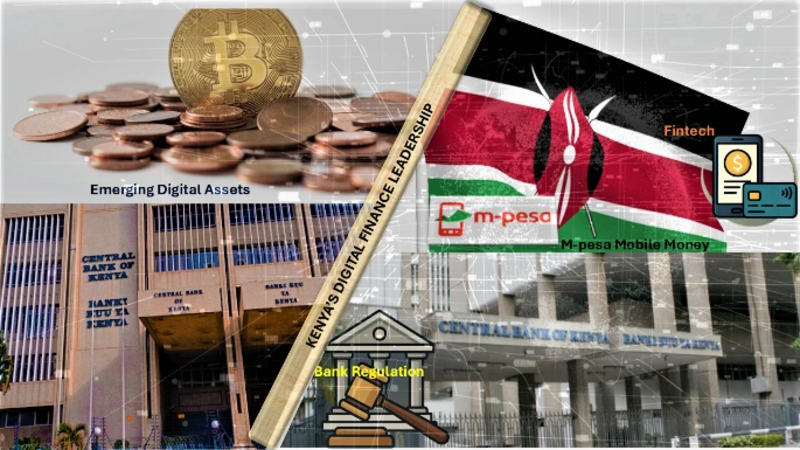
From M-Pesa to fintech regulation, Kenya’s step-by-step approach to digital finance offers lessons for policymakers, investors, and emerging markets worldwide.
Kenya’s digital finance ecosystem is widely regarded as the most...
What Is Driving Africa’s 2026 Risk Outlook?
Executive Summary
Africa’s 2026 growth and risk landscape is being reshaped by high-stakes agreements and regional macro developments. The Washington Accords between the...
.png)